
A PORTRAIT OF ME SURROUNDING ALL OF YOU
10 YEARS OF FIERMAN
ON VIEW THROUGH OCTOBER 31, 2026
WILDER ALISON / EMMA BEATREZ / SETH BOGART / CRISTINE BRACHE / KATHE BURKHART / DIETMAR BUSSE / DERIC CARNER / ELENE CHANTLADZE / SCOTT COVERT / MATTHEW TULLY DUGAN / WITT FETTER / KAREN FINLEY / RYAN FOERSTER / JENEEN FREI NJOOTLI / NORA GRIFFIN / AMIR GUBERSTEIN / NYLA ISAAC / MARCIN JANUSZ / KELLY JAZVAC JARRETT KEY / BRITTANY ADELINE KING / MATTHEW KIRK / JAMES KUSEL / GREG KWIATEK / DAPPER BRUCE LAFITTE LUCAS MICHAEL / DAVID MRAMOR / CHUCK NANNEY / DOMINIC NURRE / PRZEMEK PYSZCZEK / BARRY RATOFF / ERIC RHEIN / AMBER RANE SIBLEY / AARON MICHAEL SKOLNICK / CHARLES TRACY / JOHN TURSI / UMAN / JIMMY WRIGHT
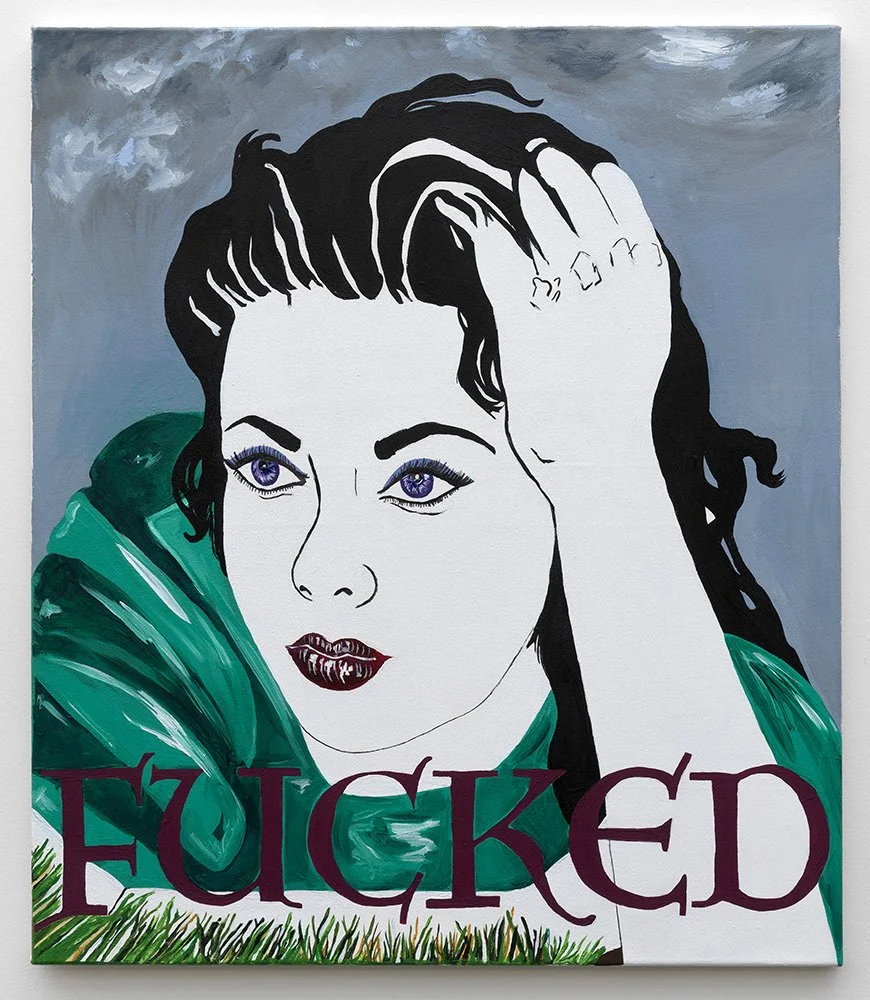
Kathe Burkhart / Fucked: from the Liz Taylor Series (after Peter Basch, Giant) / 2021 / acrylic on linen / 37.4 x 27.5"
There are plenty of ways that you can hurt a man
And bring him to the ground
You can beat him, you can cheat him, you can treat him bad
And leave him when he's down, yeah
But I'm ready, yes I'm ready for you
I'm standing on my own two feet
The other morning, sifting through the announcements, offers, and occasional client interactions that populate my inbox, I spot the headline in one of the art digests ANOTHER ONE BITES THE DUST. The irrepressible heat of Brian Deacon’s bass immediately thumps in my brain. In this case of course the “one” is another small or mid-sized gallery announcing its closure. I don’t read the article but assume it mentions a strategic reassessment, a shift in priorities, economic and political turbulence the world over. And another one gone and another one gone and another one gone, the latent cruelty in Freddy Mercury’s dismissively sexy snarl made more visceral by the recent death of a beloved colleague in his thirties. One imagines hapless gallerists in their vernissage finery mowed down in the streets.
I write these musings on the occasion of A Portrait of Me Surrounding All of You, an exhibition commemorating ten years of FIERMAN, a space I have publicly proclaimed to devote to the overlooked, the marginal, to the push-pull of intimacy and emotion. The title is borrowed from Nyla Isaac’s 2024 solo show. At its best a gallery is a self-portrait revealed over time, a cryptic unveiling in bi-monthly installments of the principal’s inner world. Inner worlds are notoriously shifty places and gallerists notoriously adventurous individuals, open to influence while hewing to an inscrutable internal logic. FIERMAN the gallery has for ten years circled around the complex desire to be seen and known and the discomfort that desire produces; lush beauty abutting frenetic anxiety, confirmation that yes we are indeed okay, set to a jangly rhythm. FIERMAN the man may rightfully be accused of exhibiting an excess of sentiment, saved perhaps by a headstrong insistence on inclusion rooted in every individual’s right to dignity. A look at the sixty-plus shows mounted over the past decade, from Jimmy Wright’s impossibly heavy sunflowers, monuments to fragility, to Jeneen Frei Njootli’s humble assemblages, punk poetry centering the reality of contemporary Indigenous experience, betrays the assertion that the personal is political and every voice deserves to be heard.
A good gallery is a space for dialogue, one that invites and demands an active viewership. Uman’s 2019 solo show was titled I will sit here and wait for you, Dapper Bruce Lafitte’s drawings all contain the phrase “I see you looking.” The brazen call for response, a dare to engage, is another personal trait rendered material, and as the man behind the wall I must thank (and to some) apologize to you, the unknown and known members of the public, for serving as interlocutor, not always by choice. I too will sit here and wait for you, and I do see you looking.
David Fierman, August 13, 2026
_
1 Queen. "Another One Bites the Dust." The Game, Elektra, 1980.
2 "Sid Motion Gallery to Close." ARTnews, 11 Aug. 2026, https://www.artnews.com/art-news/news/sid-motion-gallery-close-morning-links-august-11-2026-1234794661/.
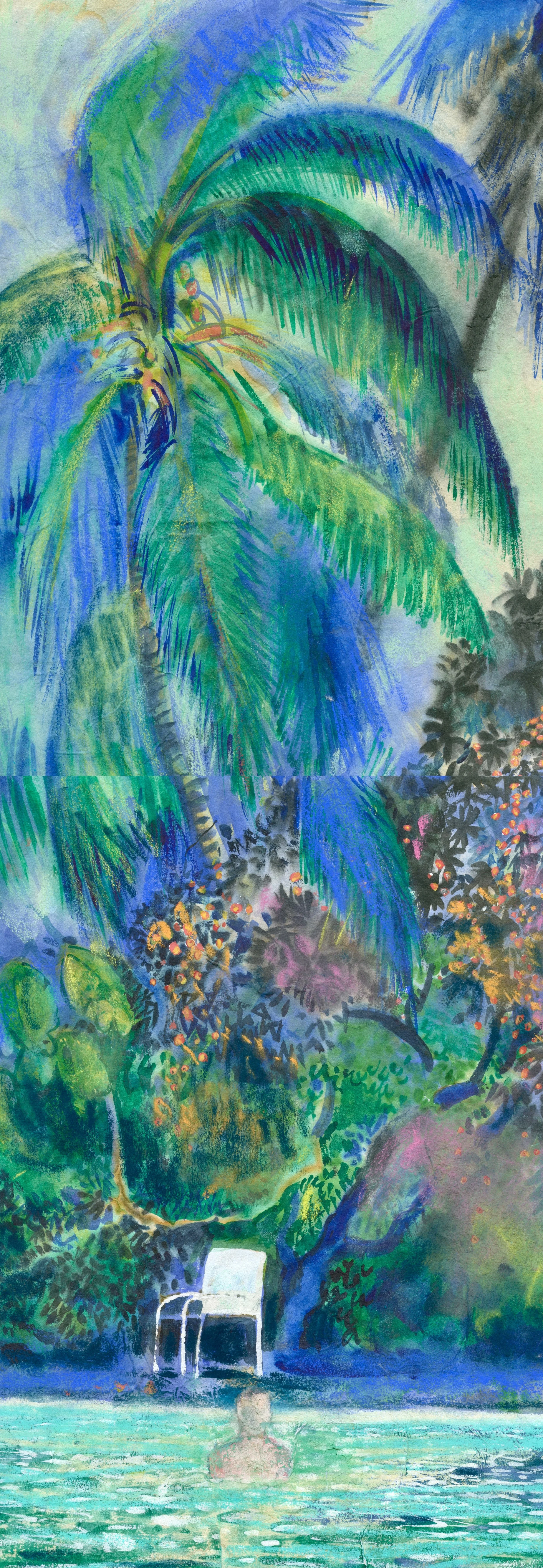
Jimmy Wright / Ken in the Pool of the Hotel Oloffson / 1976 / watercolor on Japan paper / 24 x 9”